Why Is Trump Trying So Hard to Save Russia and Putin from Inevitable Collapse?
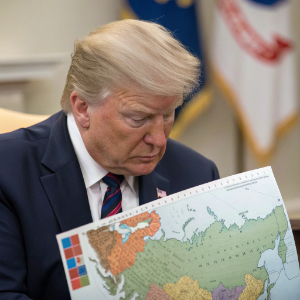
Most likely, Donald Trump’s personal mercantile interests and those of his inner circle have prevailed. Trump is a businessman, which is why he thinks in terms of commerce rather than politics. He is not particularly interested in domestic or global politics, let alone some foreign war between two countries across the ocean. Trump’s blunt statement that Vitkoff just wanted to sell Ukraine to Russia is a clear confirmation of this. When choosing between Ukraine and Russia, Donald Trump assesses their economic potential and makes decisions based on his own idea of who would be more profitable for him to do business with. This is a tragedy, and not only for America, because until now the USA had been a model of democracy and a guarantor of international law and order throughout the world.
On the other hand, we have the leader of a totalitarian state, Vladimir Putin, who has set himself the goal of restoring Russia’s influence on the international stage by military means. His plan was quite simple and straightforward: to quickly conquer Ukraine and then move on to Europe. After Russia’s invasion of Ukraine, the entire current international security system was destroyed. Putin began to act in a completely cynical and illogical manner, imposing his rules of the game on the world.
First, he annexed Crimea, and then for some reason decided that four more regions of Ukraine belonged to the RF’s Constitution, which would legitimize his actions. Putin was not deterred by the fact that he failed to completely conquer those Ukrainian territories by force of arms.
The only compelling argument dictator Putin had in this situation was that Russia has a large stockpile of nuclear weapons, which it intends to use to terrorize the entire civilized world. At first, Putin’s terrorist tactics on the international stage had the desired effect, but after the Ukrainian Armed Forces gave a decent response to the aggressor, it became clear that things were not going according to plan. In almost four years of war, Putin’s army has failed to achieve any significant results. The operations of the Russian special services in Moldova, the Czech Republic, Romania, and Poland, where they tried to bring pro-Russian forces to power and thus cut Ukraine off from the West, were also unsuccessful. In Europe, the Russians achieved temporary success only in Hungary and Slovakia, but today this is of no strategic importance to them.
Now let’s return to the United States. The results of Trump’s personal representatives’ (his son-in-law Kushner and business partner Vitkoff)’s visits to Moscow, allow us to draw two important conclusions.
First. Putin did not expect this visit to yield the desired result, as he was a few hours late for his meeting with Trump’s representatives. He usually keeps people waiting when he wants to humiliate them and show that the upcoming conversation is not important to him.
Second. Unlike Trump, Putin is an experienced politician who has set himself the goal of restoring Russia’s greatness. That is why he did not want to pay much attention to Trump’’s envoys, as he understood very well that those businessmen could in no way help him conquer Ukraine and achieve other planned goals.
While Trump’s envoys were waiting for Putin, he held a briefing where he threatened Europe with nuclear weapons. Only now, after almost four years of unsuccessful war with Ukraine, few people fear Putin and take his military rhetoric seriously. Europe is consolidating, and the United Kingdom and France are quite transparently hinting that they also have nuclear weapons. China, which is directly interested in developing mutually beneficial trade and economic relations with Europe, is not very enthusiastic about Putin’s nuclear threats either. There is another important fact that deserves special attention. European leaders understand all the challenges and threats that come from Russia today and therefore cannot allow the revival of Russian imperialism. Europe’s first response to Russian expansion was the enlargement of NATO. It is obvious that it was Putin’s “wise” policy that led to the inclusion of Sweden and Finland, which had previously clearly declared their neutrality, into the North Atlantic bloc.
Under these circumstances, will Trump really be able to help Putin and restrict the supply of American weapons to Ukraine? It is known that next year Europe plans to purchase $12 billion worth of weapons from the USA and transfer them to Ukraine. Will businessman Trump be able to refuse such a deal, and will representatives of the American military-industrial complex allow him to do so? It is obvious that the conclusion here will not be in Russia’s favor.
How will Putin and his environment respond to all this?
If we ignore unnecessary illusions and Putin’s propaganda, we can already say that after the failure of the offensive operation, everything went wrong for the Russians. Russia’s war-torn economy has been significantly weakened. International sanctions have also played an important role here. Due to the lack of significant military successes and heavy losses of manpower and equipment on the battlefield, the Russian army is demoralized and society is disappointed.
The RF is no longer capable of continuing the war, while stopping it would mean defeat, with all the consequences for Putin and his entire circle.
It so happened that Vladimir Putin himself became a hostage to his own policy. He has expelled or destroyed all his opponents and competitors. Now there is no one left to critically and objectively assess the situation, let alone suggest ways out of the crisis.
While Putin was young and energetic, he was still able to effectively control the repressive machine he had built. Besides, during that period, he still behaved more or less decently on the international arena and tried to adhere to international norms and rules.
Perhaps that is why both the West and the East turned a blind eye to Russia’s occupation of Ichkeria in the early 2000s. The so-called free world did not give Putin’s actions a proper assessment during his invasion of Georgia in 2008. In 2014, it was Ukraine’s turn, but here everything went not according to plan, and now everyone can assess Russia’s real power. Besides, European leaders have already realized the danger that the Russian military machine poses to them, and therefore they have a sincere intention to continue financing and arming Ukraine.
It is obvious that the EU has much greater economic, scientific, technical, and human potential than Russia, although it does not yet want to openly enter the war. If we add to this Ukraine’s resources and the combat experience of its Army, the balance in the confrontation will clearly not be in Russia’s favor. Moscow cannot help understanding this, and therefore the Russian elite has most likely already begun to prepare their retreat. It is obvious that after the RF’s defeat in this war, they will try to distance themselves from Putin and look for ways to save themselves.
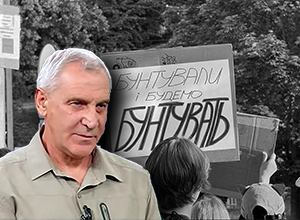
Putin is no longer the man he was in previous years. Nature is taking its toll, he is aging and losing control of the situation. The young wolves in his environment understand this well and are already preparing to enter the battle for power. The first attempt was unsuccessful when Prigozhin went to Moscow, but we still have everything ahead of us. After the weakening of Putin’s regime, important socio-political changes are expected in the North Caucasus, Buryatia, and Transbaikalia. It is those regions of the RF that have suffered the greatest human losses in the Russian-Ukrainian war, which cannot be compensated for in any way. It is in those regions that there is the largest segment of the population that may express the greatest dissatisfaction with Vladimir Putin’s Ukrainian adventure. Then the local elites will be forced to look for ways to save themselves and will stop waiting for instructions from Moscow, which could provoke a parade of sovereignties and initiate the collapse of the Russian Federation.
But while Russia’s degradation continues and has not entered its final phase yet, Putin is trying with all his might to save face and hold on to power. To this end, he is using all the methods at his disposal and mobilizing all the human, informational, and financial resources available in the RF and beyond. In particular, he occasionally curtsies to Donald Trump and tries to influence the US President by bribing his inner circle. Putin’s entire propaganda machine is also trying to save face, constantly brainwashing ordinary citizens and presenting the desired as the actual in the information space. Putin is also supported by some “good Russians”, such as Konstantin Borovoy and Grigory Yavlinsky, along with former Ukrainian Foreign Minister Dmytro Kuleba, who play along with Putin’s propaganda in Ukraine and the West and spread panic and rumors.
But despite all these efforts by Putin, the mechanisms for the self-destruction of the Russian Federation have been set in motion. After the invasion of Ukraine, Putin himself set them in motion, and now nobody can stop this process, and the clock is ticking against Russia.
Oleh Bereziuk,
Institute for Global Politics
(Image generated by neural network)